

EFB in British Columbia
Researchers up at the University of Saskatchewan are digging into why European foulbrood seems to be showing up more often. One thing they're noticing is that early spring nutrition might be playing a role, when colonies are running low and natural forage is still hard to find. Here in Northwest Minnesota, we know that story all too well. Long winters and spotty early forage can set colonies back. While the research continues, it's a good reminder to keep an eye on nutrition, watch for disease signs, and remember how our climate can stress our bees.
Read more here: Western College of Veterinary Medicine
What to Look For and How to Test
European foulbrood is a bacterial disease that affects young larvae, and it's one to keep on our radar. You might notice an irregular brood pattern or larvae that look yellowish, brown, twisted, or kind of melted down. To test, there are field kits you can use right at the hive. If you can't get a kit or want backup, send a sample to a diagnostic lab. For step-by-step ID and test kit instructions, see the University of Florida's "European Foulbrood: Identification and Treatment." For lab options, visit the University of Minnesota Bee Lab's "Diagnostic Laboratories" page. I can also shorten the post title if you'd like.
University of Florida
European Foulbrood: Identification and Treatment
University of Minnesota Bee Lab
Honey Bee Disease Diagnostic Resources
Betterbee has some good information about the EFB kit and usage
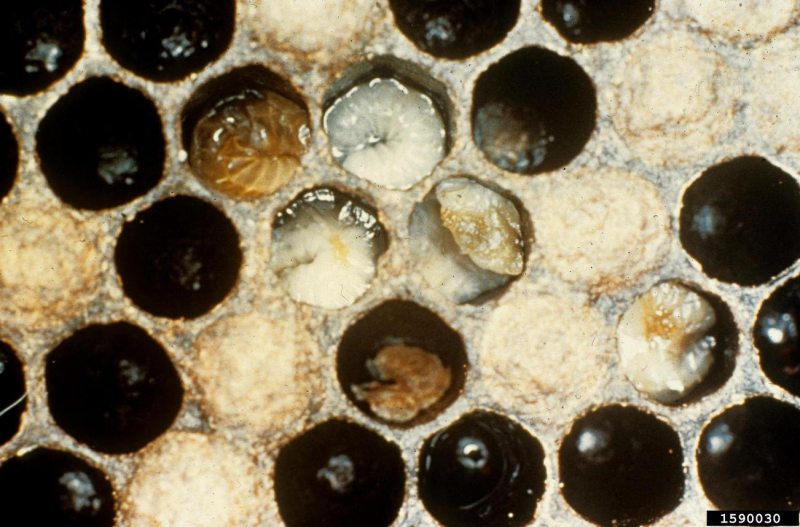
Credit: Georgia Department of Agriculture , Bugwood.org
Add comment
Comments