

PennState Extension
Honey Bee Parasites, Pests, Predators, and Diseases
This Penn State Extension guide is basically a quick reference for recognizing problems in a honey bee colony. The main point is that early identification is important. A beekeeper needs to know what healthy brood and healthy bees look like so that problems can be recognized before they become serious.
Healthy larvae should be pearly white, shiny, and curled into a C-shape in the bottom of the cell. Healthy capped worker brood should have medium-brown, slightly convex cappings and normally have a solid brood pattern.
Parasites and Pests
Varroa mites are considered one of the most serious problems facing honey bees. They are external parasites that feed on the fat bodies of adult bees and developing bees.
Tracheal mites are internal parasites that live in the bee's breathing tubes. They feed on the bee's hemolymph.
Small hive beetles are another important pest. Adults are small, dark-colored beetles, while the larvae are small, cream-colored grubs.
Bee louse is actually a wingless fly. It usually causes little harm, even though several may sometimes be found on a queen.
Greater wax moths can cause considerable damage to comb that is not protected by a strong colony. Weak or dead colonies and stored comb are particularly vulnerable.
Spiders, earwigs, and cockroaches may be found around hives but generally do not harm the bees or equipment. Ants are usually more of a nuisance than a serious threat.
Mice are more serious. They can enter colonies during fall and winter, chew comb and frames, and contaminate them with urine.
Predators
Skunks can be a serious problem in some areas. They scratch at hive entrances and eat large numbers of bees, especially during the spring.
Bears are an even more serious problem where they occur. They can destroy hives and equipment while feeding on brood and honey. Once a bear discovers an apiary, it may return repeatedly.
Brood Diseases
American foulbrood (AFB) is one of the most destructive brood diseases. It is caused by a spore-forming bacterium and affects worker, drone, and queen larvae. The spores can remain viable for 70 years or more, making AFB a particularly serious disease.
European foulbrood (EFB) is also bacterial but is considered less serious than AFB. It is often associated with colony stress and is most common in spring and early summer. Unlike AFB, EFB does not form spores.
Chalkbrood is a fungal disease. The larvae ingest fungal spores, which eventually grow through the larva after it is sealed in its cell.
Sacbrood is caused by a virus and usually does not cause severe colony losses. Adult bees generally recognize and remove infected larvae.
Bee parasitic mite syndrome involves a combination of symptoms associated with varroa mites, viruses, or both. Signs can include damaged brood, larvae with an abnormal appearance, deformed wings, high mite levels, and a declining adult population.
Adult Bee Diseases
The guide also discusses paralysis, which can produce bald, shaking bees that remain toward the outside of the hive. Several possible causes are mentioned, including viruses and certain nutritional or environmental factors.
Nosema is caused by microsporidian parasites that infect the honey bee gut. Infection is spread through contaminated feces, food, and water.
Deformed wings are commonly associated with high varroa infestations. The actual deformity is caused by deformed wing virus, which is transmitted and activated by varroa mites.
My Takeaway
What I take from this guide is that knowing what a healthy colony looks like is the first step in recognizing an unhealthy one. The guide covers a lot of different problems, but many of them have recognizable signs in the brood, adult bees, or hive itself.
For me, the biggest takeaway is the relationship between varroa mites and viruses. Varroa is not just a mite problem. High mite levels can be associated with serious viral problems, including deformed wings and the symptoms described under bee parasitic mite syndrome.
This is a good reference to keep handy during inspections. It isn't meant to replace a detailed discussion of diagnosis or treatment, but it gives the beekeeper a starting point for recognizing what may be happening inside the hive.
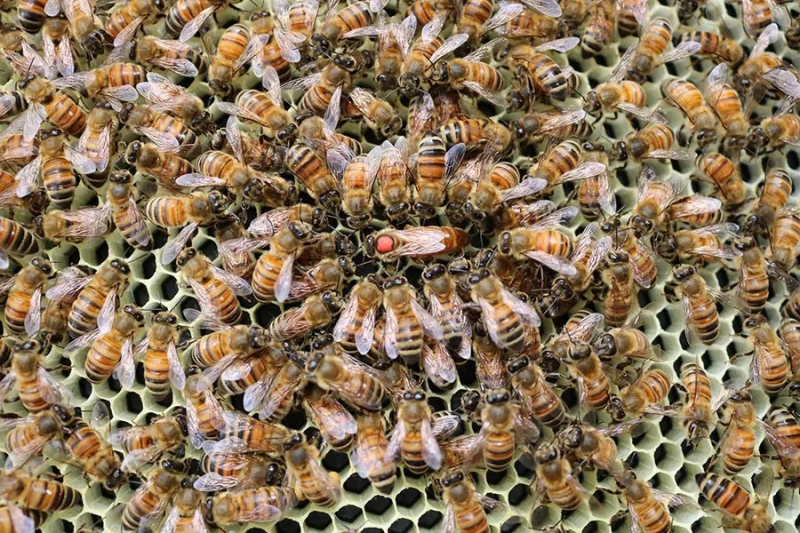
Image by Don Seifrit Jr.
This field guide is a great one to have in your library!
A Field Guide to Honey Bees and their Maladies!
A Field Guide to Honey Bees and Their Maladies is a comprehensive resource featuring 100 full-color photographs to help beekeepers recognize the symptoms of common honey bee ailments. Topics include pests such as varroa and tracheal mites, hive beetles, and bee lice, as well as wildlife hive predators such as bears, mice, and skunks. Additional sections cover diseases such as American and European foulbrood, nosema, and Colony Collapse Disorder. Simple cultural control methods, such as the use of hardware cloth, applying cinnamon, and keeping colonies elevated away from predators, are also discussed.
It's published by the PennState Extension office.
The cost only $12.00
Add comment
Comments